Anatomical terms of movement are used to describe the actions of muscles on the skeleton. Muscles contract to produce movement at joints – where two or more bones meet.
As in anatomical terms of location, the terms used assume that the body starts in the anatomical position. Most movements have an opposite – they have been paired up for ease of understanding.
Flexion and Extension
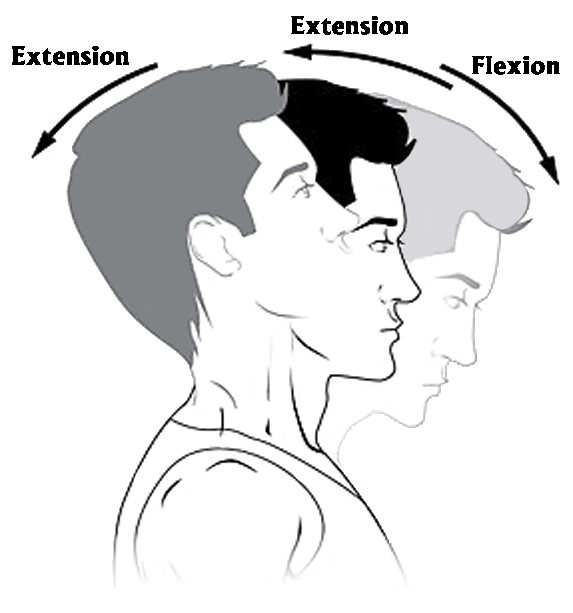 Flexion and extension are movements that occur in the sagittal plane. They refer to increasing and decreasing the angle between two body parts:
- Flexion refers to a movement that decreases the angle between two body parts. Flexion at the elbow is decreasing the angle between the ulna and the humerus.
- Extension refers to a movement that increases the angle between two body parts. Extension at the elbow is increases the angle between the ulna and the humerus.

 Abduction and Adduction
Abduction and adduction are two terms that are used to describe movements towards or away from the midline of the body.
- Abduction is a movement away from the midline
- Adduction is a movement towards the midline
In fingers and toes, the midline used is not the midline of the body, but of the hand and foot respectively.

Medial and Lateral Rotation
Medial and lateral rotation describe movement of the limbs around their long axis:
- Medial rotation is a rotating movement towards the midline.
- Lateral rotation is a rotating movement away from the midline.
Elevation and Depression
Elevation refers to movement in a superior direction (e.g shoulder shrug), depression refers to movement in an inferior direction.
Pronation and Supination
This is easily confused with medial and lateral rotation – but the difference is that pronation and supination can occur only when the forearm in semi-flexed.
- Pronation moves the palm of the hand so that it is facing posteriorly (your forearms are pronated when typing on a keyboard).
- Supination moves the palm of the hand so that it is facing anteriorly (your hands are supinated when holding a bowl of soup).
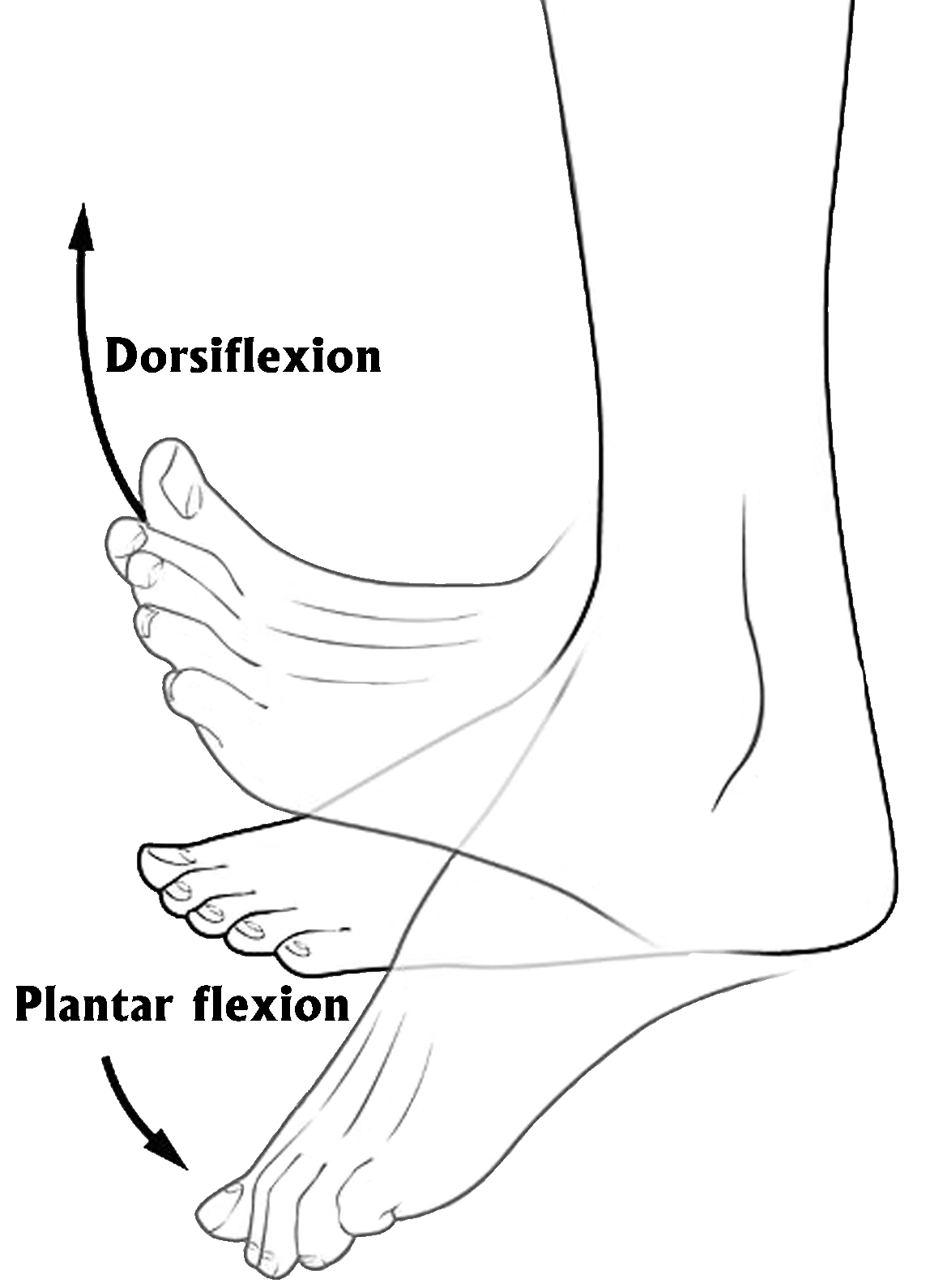 Dorsiflexion and Plantarflexion
Dorsiflexion and plantarflexion are terms used to describe movements at the ankle. They refer to the two surfaces of the foot; the dorsum (superior surface) and the plantar surface (the sole).
- Dorsiflexion refers to flexion at the ankle, so that the foot points more superiorly
- Plantarflexion refers extension at the ankle, so that the foot points more inferiorly
Opposition and Reposition
A pair of movements unique to humans, these apply to some additional movements that the hand and thumb carry out
- Opposition brings the thumb and little finger together.
- Reposition is a movement that places the thumb and the little finger away from each other.
READ MORE: Human Anatomical Planes & Orientations
Scaravelli Inspired Yoga Teacher Catherine Annis
07747 19 69 14
Kensington Notting Hill, London, UK
